Common blood biomarkers on lab reports (educational overview)
Key takeaways
- This is a name tour, not a ranked medical panel. Clinicians choose what to order for your history.
- Each marker has units and a lab-specific interval.
- A flag on one line is information for your clinician, not a blog diagnosis.
- Upload a PDF for an educational walkthrough of what it shows — not a clinical interpretation.
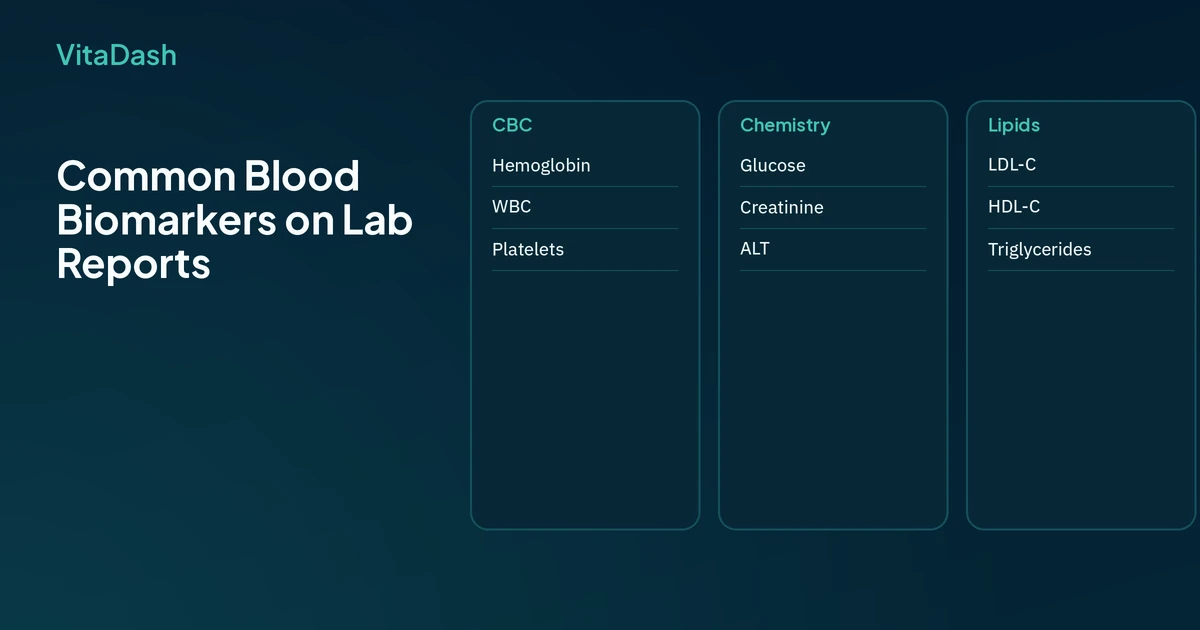
Routine blood work often groups related tests on one PDF: a complete blood count, a metabolic or chemistry panel, a lipid panel, sometimes thyroid markers, and sometimes 25-OH vitamin D. Seeing a name on a report does not mean that marker is “the one that matters” for you.
Names you may recognize
The table below is a high-level orientation only. The same analyte can appear under slightly different labels. Units and intervals are lab-specific. Bring questions about any flagged or unfamiliar line to the clinician who ordered the tests.
Upload a blood-test PDF you already have for an educational walkthrough of what the PDF shows — then discuss results with your doctor. VitaDash does not diagnose or interpret results clinically.
Get free previewSources
- MedlinePlus — Lab tests: https://medlineplus.gov/lab-tests/
- MedlinePlus — Cholesterol testing
| Example marker names | Usually relates to (high-level) | Next step |
|---|---|---|
| Hemoglobin / CBC lines | Blood cell panel components | Clinician interpretation |
| HbA1c | Longer-term glucose marker | Clinician interpretation |
| LDL-C / lipids | Cholesterol fractions | Clinician interpretation |
| 25-OH vitamin D | Vitamin D screening marker | Clinician interpretation |
| TSH | Thyroid panel component | Clinician interpretation |
Upload a blood-test PDF you already have for an educational walkthrough of what the PDF shows — then discuss results with your doctor. VitaDash does not diagnose or interpret results clinically.
Get free preview